Los Angeles homeowners approach lawn decisions differently than clients we work with in temperate, rain-soaked regions. Sunshine is a given here. Water is not. The right choice between artificial turf and sod depends on microclimate, household use, architectural style, and how the rest of the landscape works. After hundreds of installations across the Basin, from Woodland Hills heat to marine-layer Palos Verdes fog, we have learned where each surface shines and where it fails.
The LA context that changes the math
Southern California sunshine drives both the appeal and the challenge. LA’s Mediterranean climate offers cool, wet winters and long, dry summers. New sod wants regular irrigation and careful soil prep to thrive. Municipal watering rules have tightened over the last decade, and tiered rates make heavy summer irrigation expensive. Many clients also balance aesthetics with bigger goals, like water-wise planting, hillside stability, and outdoor living spaces they can use year-round.
In practical terms, a water-hungry lawn is rarely the star of a high-performing Los Angeles yard. At the same time, there are blocks in Sherman Oaks, Encino, and Pasadena where tree-lined streets feel incomplete without a soft, living front lawn. That tension is why we evaluate turf and sod in the context of your entire site plan, not as a standalone purchase.
What we mean by artificial turf and sod
Artificial turf is a synthetic grass system installed over a prepared aggregate base. Quality products use multi-tone polyethylene blades stitched into a perforated backing with separate infill materials for ballast and fiber support. Most modern turfs range from 1.5 to 2 inches in pile height, with varying blade shapes and thatch to look natural in bright LA sun. The system is only as good as the base and drainage below it.
Sod is living grass, either cool-season fescue, bermuda or zoysia hybrids for warm season, and boutique options like UC Verde buffalo grass. It arrives as rolls or slabs and is laid over prepared soil. A sod lawn rests on living biology. It demands irrigation, mowing, seasonal fertilization, and aeration, especially in clay-heavy areas like Mid-City or parts of the South Bay.
Initial cost, lifetime cost, and where the curves cross
We track hard numbers on jobs because the price story drives many decisions. Typical installed costs in LA County fall into these ranges:
Artificial turf:
- Installed cost commonly lands between $12 and $22 per square foot. The spread reflects base depth, site access, edging, product quality, and whether we add a drainage grid, pet system, or cool infill. Maintenance costs are modest: occasional rinsing, debris blowing, infill top-offs every few years, and seam inspection. Budget a few hundred dollars annually for larger yards if you want professional refreshes.
Sod:
- Installed sod with basic grading sits around $1.50 to $3.50 per square foot. If we’re replacing or adding irrigation, expect an additional $2.50 to $8 per square foot depending on system complexity, pressure regulation, and smart controller upgrades. Yearly ownership includes water, mowing, fertilization, and periodic aeration. Irrigation alone can run several hundred to several thousand dollars per year, depending on lawn size and water rates in your district. If you pay a weekly mow-and-blow crew, add that monthly line item.
When clients plan to stay in their homes for 10 to 15 years, artificial turf’s higher upfront cost often breaks even with sod’s recurring water and maintenance costs, sometimes sooner in Westside and Valley neighborhoods with steep tiered water pricing. For shorter time horizons, or smaller lawn panels within a larger hardscape design, living sod remains cost effective and aesthetically consistent with traditional streetscapes.
Water and drought considerations
Every gallon not spent on irrigation is a tangible win in LA. Artificial turf needs almost no water, aside from occasional rinsing to manage dust or pet odors. In contrast, most fescue lawns require roughly 1 inch of water per week in summer to maintain deep green color. On a thousand-square-foot lawn, that can exceed 20,000 gallons during a hot month. Efficient systems with matched precipitation heads, pressure regulation, and soil moisture sensors help, but the baseline demand remains.
If your priority is a water-wise property, consider whether you need a lawn at all. Many clients pair a small synthetic turf play panel with drought-tolerant landscaping around it. Others scale the lawn down to a compact real-grass courtyard framed by native plantings. The Ultimate Guide to Drought-Tolerant Landscaping in Los Angeles and The Best Drought-Tolerant Plants for Los Angeles Yards are themes we return to for good reason: the right plants in the right places outperform any lawn in long-term sustainability.
Heat, comfort, and microclimates
Heat is where artificial turf can disappoint if expectations are off. On a still August afternoon in Woodland Hills, a dark, dense artificial turf can read 140 to 160 degrees at the surface. That is uncomfortable for bare feet and pets. Lighter, more open turfs with reflective or cooling infills can reduce surface temperature by 10 to 25 degrees, and nearby shade, pergolas, and misting strategies help. We often design a pathway layout so kids and dogs have shaded routes, or we specify a pergola or a small covered patio to provide relief. Why Los Angeles Homeowners Are Investing in Custom Pergolas ties in here, since adding filtered shade can transform synthetic surfaces in summer.
Sod runs cooler naturally due to evapotranspiration. Even in peak heat, it stays far more walkable. In coastal areas with regular marine layers, the comfort difference between turf and sod can be modest. Two blocks off the beach in Manhattan Beach, we measured a 15 degree delta on a mild July afternoon. Five miles inland the difference widened to more than 35 degrees under direct sun.
Drainage, base construction, and long-term performance
The less glamorous work under any lawn determines whether it lasts. Poor base prep ruins both sod and turf.
For artificial turf, we remove organics, establish finished grades, and build a base, typically 3 to 5 inches of compacted Class II road base or decomposed granite over a geotextile fabric. In hillside zones or against structures, we integrate French drains or perforated piping and maintain a 1.5 to 2 percent slope away from foundations. In pet areas we sometimes add a 3D drainage mat that accelerates vertical percolation and reduces odor. Edging matters as much as base; we set steel, concrete, or paver borders so the turf edge stays crisp, resists uplift, and survives heavy traffic. Artificial Turf Installation: Everything Los Angeles Homeowners Should Know goes deeper on that sequence.
Sod needs soil, not just subgrade. We evaluate texture and structure, amend for drainage or water-holding capacity based on a simple jar test and, when appropriate, a lab soil analysis. Clay-heavy neighborhoods benefit from gypsum and compost. Sandy coastal strips often need organic matter to retain nutrients. We set sprinkler head heights, ensure matched precipitation, and correct coverage to avoid hot spots that stress new roots.
One place we refuse shortcuts is drainage against walls and in narrow side yards. Replacing a lawn is cheaper than repairing water intrusion. If your property has chronic pooling, especially in down-slope corners, How to Solve Common Yard Drainage Problems and French Drains Explained are worth a read before you decide on turf or sod.
Pet use, play, and real family life
For active households, turf can be a workhorse. Dogs do not create mud on synthetic systems, and urine drains through, provided the base is well compacted and designed to percolate. We warn clients that odors are a function of cleaning discipline and ventilation. A bi-weekly rinse and an enzyme cleaner after heavy use largely solves it. In high-traffic dog runs we choose shorter pile products and antimicrobial infills that do not cling to paws.
Kids’ play is about fall safety and traction. In play yards we specify extra infill in circulation paths and tuck seams away from soccer goal lines. Where families add a backyard putting green, we build a different base section and use low-pile nylon or polypropylene greens with separate fringe turf. For multi-use yards, a split lawn concept works: a cool-season sod panel in partial shade for barefoot lounging, a synthetic panel for year-round durability near the grill, and hardscape for dining and traffic. How Ridgeline Outdoor Living Creates Functional Outdoor Living Spaces often centers on these kinds of zoned solutions.
Aesthetic realism and neighborhood fit
Good artificial turf has come a long way. The best products read as believable from curbside, with multi-tone fibers and a thatch layer that breaks up the uniformity. Under direct noon sun, though, even premium turf can sheen slightly compared to a living lawn. Strategic planting softens that. We weave specimen grasses, low groundcovers, and boulders into the forecourt so the lawn reads as one texture among many rather than a giant green rectangle.
Sod still offers the most natural feel, especially in shady front yards with mature oaks or jacarandas. Marathon-type tall fescues are common in LA for their year-round color and decent shade tolerance. Warm-season bermuda and zoysia look superb in summer, take foot traffic well, and require less water once established, but many warm-season types go straw colored in winter unless overseeded. If winter green is nonnegotiable, we discuss overseeding trade-offs or steer the client toward fescue.
Environmental impacts beyond water
The environmental scorecard is not one-sided. Artificial turf saves water and eliminates fertilizer and herbicide use on that surface. On the other hand, it is a plastic product with a finite lifespan, typically 12 to 20 years depending on UV exposure and maintenance. Recycling options are improving but are not universal. The heat island effect is real on larger synthetic expanses without shade.
Sod provides habitat for soil organisms and cools the microclimate, but it demands irrigation and often fertilizer. Runoff from overwatered or chemically treated lawns can carry nutrients into storm drains. Choosing organic fertilizers, managing irrigation, and designing gardens that capture and infiltrate water mitigate much of that.
Business Name: Ridgeline Outdoor Living
Address: 845 E Walnut St, Pasadena, CA 91101, United States
Phone: (626) 469-5822
Ridgeline Outdoor Living
Ridgeline Outdoor Living is a Pasadena-based landscape design-build company serving Greater Los Angeles with custom outdoor living, hardscape, and drought-tolerant landscape solutions. The company specializes in patios, retaining walls, outdoor kitchens, drainage, hillside projects, and turnkey landscape construction, handling projects from design and permitting through final build and warranty.
845 E Walnut St, Pasadena, CA 91101, USA
Business Hours:
- Monday – Saturday: 8:00 AM – 6:00 PM
- Sunday: Closed
Follow Us:
Many homeowners end up with a third path: a small lawn, real or synthetic, embedded in a primarily drought-tolerant landscape that uses trees, shrubs, permeable paving, and selective water features to shape microclimates. The result feels resort-like without the resource burden. Ten Ways to Create a Resort-Style Backyard at Home often starts with right-sizing the lawn.
Installation quality is the difference between delight and regret
We have taken over too many projects where the wrong base or sloppy seams turned a homeowner against turf unfairly. On sod, we see compacted, unamended subsoils that suffocate roots. On turf, we find plastic laid over topsoil with no compaction, which guarantees waves, smells, and weeds at seams.
Here is a short site-prep checklist we use before recommending turf or sod:
- Confirm drainage path and slope away from structures, and design for a safe overflow path during heavy storms. Identify soil texture and amend accordingly for sod, or specify base depth and compaction targets for turf. Map irrigation coverage for sod, including pressure and head placement, or plan hose bib access for occasional turf rinsing. Account for shade patterns across seasons to avoid picking a product that fails in winter shade or summer scorch. Define edge conditions where turf or sod meets pavers, planters, or walls so transitions look intentional and last.
What it is like to live with each option in LA
Clients often ask what happens after the Instagram moment. With sod, the first month requires patience. We ask families to keep dogs and kids off while roots knit. Twice-daily short watering sets the topsoil, then we shift to fewer, deeper cycles. The first summer can be tricky in inland valleys. A hot week can show brown edges if the irrigation controller is not tuned to microclimates.
Artificial turf flips that script. Day one, it looks finished, and you can use it immediately. The surprise comes later when Santa Ana winds drop leaves and dust. Without a quick weekly blow-off, debris settles and dulls the look. After a backyard party, beer or food spills can require soap and a rinse. None of these are heavy lifts, but they are different from a living lawn’s rhythms.
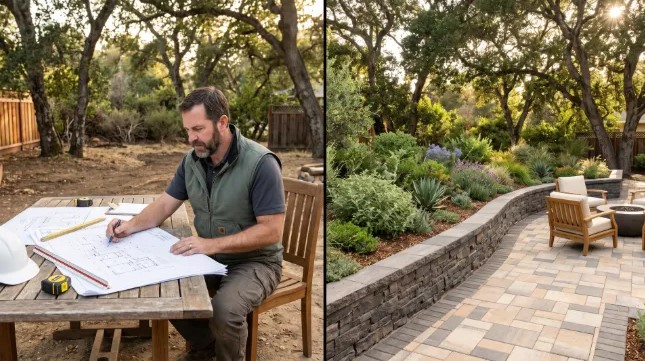
Anecdotally, one Hancock Park client replaced a water-thirsty strip on the south side of the house with turf to connect a pergola, an outdoor kitchen, and a small fire pit. The space hosts year-round gatherings without mud or mowing. A Pasadena family chose a hybrid. They kept a small, shaded fescue lawn for the dogs and used turf toward the back fence near a kids’ sport court. It feels coherent because we treated the lawn panels as part of a broader composition that includes paver patios, lighting, and a landscaping guides low retaining wall that doubles as seating. Examples like 15 Paver Patio Designs Los Angeles Homeowners Love and 10 Outdoor Lighting Ideas for Los Angeles Landscapes play into that cohesion.
Health and safety notes you should not ignore
We are often asked about turf and microplastics. Current products use stable polymers, and most shedding happens during installation and eventual removal. Routine use does not release noticeable fibers in our experience, though ongoing research is worth watching. If this is a top concern, reduce infill migration by selecting coated sands and designing edges that contain material. For sod, we prioritize organic lawn care when possible and discourage broad-spectrum herbicides, especially in yards with small children and pets.
For both surfaces, consider fall protection near play structures. Turf systems can be engineered to meet fall safety with the right underlayment. Natural grass cushions falls reasonably well when healthy and irrigated, less so when compacted or during winter dormancy. Around fire features, keep both turf and sod at a safe distance. We ring gas fire pits with stone or gravel bands so stray embers cannot melt turf fibers or scorch sod. Our 12 Backyard Fire Pit Ideas for Entertaining Year-Round often include these protective design rings.
Choosing sod types that work in LA
If you tilt toward living lawn, selecting the right grass matters more here than in wetter climates. Marathon-type tall fescues remain a staple for year-round green and moderate shade tolerance. They like regular water and appreciate afternoon shade in the Valley. Hybrid bermudas thrive in heat, withstand sport-level foot traffic, and need less water once established, but they do enter dormancy and prefer full sun. Zoysia offers a dense, cushioned surface that handles traffic and partial shade better than bermuda, with slower growth that reduces mowing but requires careful establishment. For ultra-low water and a more natural look, UC Verde buffalo grass forms a soft, ankle-high meadow that many modern landscapes embrace, especially when combined with native shrubs and stone. It uses a fraction of the water of fescue once established, with a different, more relaxed aesthetic.
Turf product choices that do not read like carpet
When we specify artificial turf, we balance pile height, density, and blade shape with your use case. Tall, lush products look great from the curb but mat under heavy play. Shorter, slightly sparser turfs with springy thatch recover better from foot traffic. We prefer lighter, olive-and-lime blends near concrete because deep green reads artificial against light stone in LA’s strong light. Nylon fibers near outdoor kitchens resist hot chair legs and dropped utensils better than pure polyethylene. If your yard bakes, ask for cool-weather infill trials on a small panel to experience the difference in your specific sunlight.
How lawns interact with the rest of your outdoor living plan
A lawn rarely stands alone in our projects. It ties into paver patios, seating walls, planters, and sometimes a pool deck. Paver Patios vs Stamped Concrete: Go to this site Pros and Cons is not just a design debate. It affects how your lawn meets the hardscape. Pavers allow clean soldier-course edges and hidden restraints that hold a turf seam. Concrete offers monolithic edges but needs careful joint layout to avoid cracking at turf transitions. For hillside homes, small lawn terraces work with retaining walls to create level, usable zones, as we cover in Retaining Walls for Hillside Properties: What Homeowners Need to Know.
Lighting completes the picture. A soft wash across a turf panel reads elegant without glare, while sod benefits from moonlighting that reveals texture. Ten Outdoor Lighting Ideas for Los Angeles Landscapes emphasizes shielding and warm color temperatures that complement both surfaces.
A quick decision guide for common LA scenarios
- Minimal water use, year-round usability, and high foot traffic: lean toward artificial turf, with a focus on cooling strategies and shade. Classic curb appeal in a tree-lined neighborhood with partial shade and moderate use: choose sod, typically a tall fescue blend, with smart irrigation. Pets and muddy winters in a narrow side yard: favor artificial turf with a pet-grade drainage layer and enzyme maintenance routine. Architectural modernism with crisp geometry: small, intentional turf or sod panels framed by pavers, gravel, and low plantings, sometimes mixing both surfaces. Hot inland lot with young trees and no shade yet: consider a phased plan, starting with a smaller turf panel and drought-tolerant beds, then reassess sod when canopy grows.
Expected lifespans and what replacement really looks like
A well-installed artificial turf field can look good for 12 to 18 years, sometimes longer in shaded or lightly used areas. You will notice fiber flattening over time. We can refresh it with power brooming and selective infill top-offs, but at some point the surface loses realism and you decide to replace. Replacement is faster than the original install because the base remains intact, though we still inspect and correct any settling.
A sod lawn’s lifespan is indefinite with good care, but sections decline from shade changes, pests, or traffic scars. Renovation usually means dethatching, aeration, and overseeding, or partial resodding after addressing soil and irrigation issues. The cost is incremental rather than a single big event.
Blended solutions are often the sweet spot
Some of our favorite LA backyards now carry a small synthetic lawn for the primary play surface, a narrow real-grass strip in partial shade for foot-cooling and dog lounging, and generous hardscape for entertaining. We tuck water features at the edges to add movement without creating a maintenance burden. See 12 Water Feature Ideas for Luxury Los Angeles Backyards for inspiration that scales from courtyard rills to basalt columns. These blended yards perform in heat, meet water budgets, and feel alive. They also boost value, which ties back to 10 Hardscaping Features That Increase Property Value and 12 Outdoor Living Features That Add the Most Value.
What Ridgeline looks for during the first site walk
We walk the property with three timeframes in mind: this summer, three years from now, and after the next big winter storm. That lens changes recommendations. If a jacaranda will double in size, we predict future shade and pick sod or turf accordingly. If your driveway pitch sends sheet flow toward the lawn, we design a shallow swale or a permeable band, a concept that relates to The Most Popular Driveway Materials in Los Angeles and 15 Driveway Paving Ideas to Improve Curb Appeal. If you plan an outdoor kitchen within two years, we choose a turf product that tolerates furniture drag and grease cleanup, and we run empty conduits now to avoid trenching later. Outdoor Kitchen Trends Los Angeles Homeowners Are Choosing and How Much Does an Outdoor Kitchen Cost in Los Angeles? Are parts of that longer plan.
The bottom line for Los Angeles homes
There is no one-size answer. Artificial turf is superb when water conservation, guaranteed green, and durability matter more than temperature and material provenance. Sod is right when comfort underfoot, ecological function, and a classic look matter more than irrigation. Either one can be the wrong choice if base work is poor or if it clashes with how you truly live outside.
If you are on the fence, start by shrinking the footprint. Build the outdoor rooms you will use first, set the drainage right, and then frame a lawn panel to match the way you entertain. Whether we are designing a serene hillside terrace or a lively family yard with a fire feature and dining zone, that sequencing yields landscapes that feel intentional, efficient, and beautiful year-round.