Homeowners in Los Angeles often come to us ready to transform a blank slab of dirt into a true outdoor room. The first big fork in the road is almost always the same: paver patio or stamped concrete. hardscaping services Pasadena Both can look beautiful, both can frame a pool or host a full outdoor kitchen, and both can last for decades when built correctly. Yet they behave differently underfoot, under heat, and under the realities of Southern California soil and water.
What follows is the perspective we have earned building hundreds of patios from the Westside to the foothills. We will talk numbers where they help, point out the details that do not make the glossy brochures, and share the judgment calls we make on site, from hillside compaction to choosing a sealer that will not make your new surface slippery.
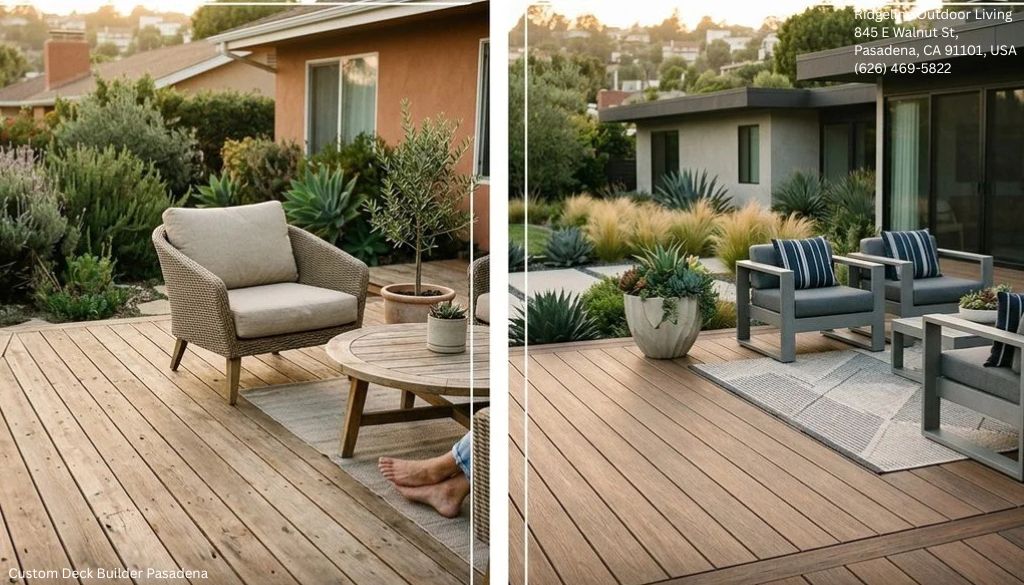
The look and the long view
A patio sets the tone for everything else outdoors, from pergolas to planters to low-voltage lighting. Stamped concrete shines when you want a single, continuous surface in a custom pattern. The coloring can be subtle, almost stone-like, and the grout lines are part of the stamp rather than real joints. Pavers excel at texture and shadow. Even a simple three-piece modular paver can create rhythm that changes with the sun angle. If you are considering 15 Paver Patio Designs Los Angeles Homeowners Love, you already know how many colors and edges are available, from crisp contemporary rectangles to tumbled cobble.
Where taste meets time, the differences compound. Concrete is unified, so hairline cracks become part of the picture. Pavers are modular, so you see individual units separated by joints filled with sand. Cracks are rare, but joints require some attention over the years. Which you prefer aesthetically often answers most of the other questions.
Cost ranges in Los Angeles
Local costs are sensitive to access, base preparation, demolition, drainage improvements, and design complexity. On straightforward backyard projects, we typically see these ranges:
- Quick comparison at a glance: Stamped concrete: about 15 to 28 dollars per square foot installed for patios, including standard base prep, control joints, color, and a single topcoat sealer. Concrete with more complex stamp profiles, multiple color releases, decorative saw cuts, or integral steps: up to the low 30s. Interlocking pavers: about 20 to 40 dollars per square foot installed for patios, including class II base, bedding sand, edge restraint, and polymeric joint sand. Premium or large-format pavers, complex laying patterns, curved edges, lighting sleeves, and on-grade steps: mid 30s to high 40s.
Site conditions move the needle. On hillside properties where exporting soil or importing base adds trucking time, both systems cost more. If we are integrating an outdoor kitchen, gas and conduit sleeves, or building out seat walls and a fire feature, the total project cost shifts, but the square foot math above remains a fair starting point. When clients ask How Much Does an Outdoor Kitchen Cost in Los Angeles, we often break the estimate into two columns: surface and structure, so you can design the patio and the appliances in parallel without guessing.
Business Name: Ridgeline Outdoor Living
Address: 845 E Walnut St, Pasadena, CA 91101, United States
Phone: (626) 469-5822
Ridgeline Outdoor Living
Ridgeline Outdoor Living is a Pasadena-based landscape design-build company serving Greater Los Angeles with custom outdoor living, hardscape, and drought-tolerant landscape solutions. The company specializes in patios, retaining walls, outdoor kitchens, drainage, hillside projects, and turnkey landscape construction, handling projects from design and permitting through final build and warranty.
845 E Walnut St, Pasadena, CA 91101, USA
Business Hours:
- Monday – Saturday: 8:00 AM – 6:00 PM
- Sunday: Closed
Follow Us:
Preparation and subgrade, the part you rarely see
Pavers and stamped concrete both rely on the same first principle: the ground must not move. In the Valley, clay soils swell and shrink with moisture. Near the coast, native sands drain fast but can ravel. On hillsides, fill conditions vary every ten feet. We test compaction, we over-excavate where needed, and we specify base thickness based on bearing and use.
For stamped concrete patios, we typically install 4 inches of 3,000 to 3,500 psi mix for pedestrian areas, on 4 to 6 inches of compacted base. For vehicle-bearing areas, the slab and base both increase. Reinforcement varies. On most patios, we use steel rebar, not just wire mesh, and we tie it properly, then chair it so the steel sits in the correct plane. Control joints are laid out to manage cracking, which is inevitable in concrete. The art is to place those joints where they make visual sense with your stamp pattern and furniture layout.
For pavers, we excavate, compact the subgrade, lay 4 to 8 inches of class II base in lifts, screed a 1 inch sand bed, and set the units. Then we install edge restraints, sweep in polymeric sand, and compact the field with a plate compactor suited to the paver size. In earthquake country, the interlocking mechanism of pavers performs well because the system can flex minutely without telegraphing a structural crack.
Drainage in a dry city that floods in bursts
Los Angeles teaches the same lesson every winter. A drought-tolerant yard is not a dry yard. When the rains come, especially with atmospheric rivers, patio surfaces must shed or soak water without sending it into a neighbor’s yard or your foundation.
Stamped concrete is a hard, non-permeable surface, so slope and drain locations matter. We set a minimum 1 to 2 percent fall away from structures and often notch drains into saw cuts so they disappear in the pattern. French Drains Explained: Protecting Your Property From Water Damage has become one of our most-requested topics because so many backyards were built flat. If your home sits on a hillside, tight control of surface and sub-surface flow protects the slope and the hardscape that sits on it.
Pavers offer a second strategy. Permeable paver assemblies, built with open-graded base and voided joints, let water pass through. They cost more for the base material and excavation, but they can reduce standing water and help with infiltration where soils accept it. On smaller patios, even a standard paver system with careful grading, a catch basin, and thoughtful transitions solves most problems.
If your yard already shows signs you need better drainage — puddles under the eaves, algae rings on the existing slab, planters that slough after storms — put drainage decisions at the front of the patio conversation, not the end. It is easier to set sleeves, sumps, and trench lines before you build a beautiful surface over the top.
Texture, heat, and slip resistance
Patios live in bare feet, flip-flops, and party shoes. Color and texture change how each surface behaves with heat and water.
Stamped concrete can be broomed lightly, but most stamped finishes rely on the relief of the pattern for traction. Sealers deepen color and protect pigment, yet the wrong sealer, or too heavy an application, can make the surface slick when wet. We specify sealers with a grip additive on pool decks and near outdoor kitchens. Color choice matters for heat. A charcoal stamp around a south-facing pool will read as 10 to 20 degrees warmer to the touch than a light sandstone tone on a mild day.
Pavers run the gamut from honed porcelain to tumbled concrete to textured stone. Many concrete pavers carry a surface microtexture that reads cooler and grippier than smooth concrete, especially in lighter colors. Larger format pavers in porcelain look gorgeous, but they require exacting base work and can be slippery if you choose a finish rated for interior rather than exterior use. We confirm the coefficient of friction and manufacturer’s outdoor rating before we sign off.
Cracking, settling, and repairability
Concrete will crack, which is not the same thing as failing. Joints control where the slab chooses to relieve stress, and when cracks do appear outside those joints, we have options. We can disguise a random crack with a decorative saw cut, stitch it with epoxy and pins, or leave it alone if it remains hairline. Larger movement, often tied to poor subgrade prep, is harder to hide.
Pavers rarely crack. Individual units can chip on corners if a heavy object strikes a thin edge, but isolated damage is easy to replace. If a tree root pushes a corner of your patio, we can lift that section, shave roots within arborist guidelines, add base, and relay. On several hillside projects where we installed retaining walls and patios together, minor movement after the first rainy season was resolved with a single day of paver adjustment, which beats grinding high ridges in a concrete slab.
Maintenance over the first decade
Both systems ask for care, but not equally.
Stamped concrete likes a re-seal every two to four years depending on sun exposure and foot traffic. That keeps color from chalking and protects against wine or grease near an outdoor kitchen. The re-seal is fast if the original product and a compatible topcoat are documented. Without that record, the contractor must test small areas to avoid peeling.
Pavers ask you to keep joints topped with polymeric sand and to watch for weeds along edges if planters sit close. A blower and an occasional rinse keep them clean. Efflorescence — the whitish film that appears as salts migrate to the surface — can show up on both stamped concrete and pavers. It fades with time, and specialty cleaners speed that along. We plan borders and edge restraints carefully so planters do not shed soil into joints, which reduces maintenance.
Timelines and how soon you can use the space
Poured concrete moves fast at the start and slows at the end. A typical stamped concrete patio pours in one day, stamps that afternoon, and takes another day for detailing and cuts. Then the surface needs time to cure. Light foot traffic is fine within 24 to 48 hours, but we ask clients to keep furniture and grills off for about a week. Heavy loads wait longer.
Paver patios are more linear. The base prep takes the same effort, but once the field is down and sanded, you can use the surface right away. We often set furniture the same day after the final compaction and joint sand activation. On compressed schedules — pre-wedding, pre-holiday — that matters.
Integrated features: kitchens, fire, water, and lighting
A patio is rarely a standalone finish. Clients considering 12 Backyard Entertainment Features Every Homeowner Should Consider often end up with a short list: built-in grill, a beverage fridge, a fire pit, and lighting. Both surfaces work with those features, but details differ.
For outdoor kitchens, we coordinate footings for the island, gas and electrical sleeves, and a legible layout for cuts or unit fits. Stamped concrete looks clean around a straight-edged island, while pavers can echo the island’s stone veneer with a soldier course or a color band. If you are comparing Outdoor Kitchen Trends Los Angeles Homeowners Are Choosing, know that radiant heat from a grill can discolor sealed concrete a few inches from the base if the sealant is light duty. On pavers, the color goes through the unit, and heat marks are less common.
Fire features raise two practical notes. First, sparks from wood-burning pits can scar sealed concrete more visibly than textured pavers. Second, gas fire features create point loads where the vessel sits. We distribute those loads no matter the surface, but for large, heavy bowls or combined fire and water pieces — some of our favorite 15 Fire and Water Feature Ideas for Modern Landscapes — pavers make later repositioning easier if you change your mind.
As for lighting, conduit placement before slab pour is mandatory. With pavers, we snake low-voltage wires under units later if you add path lights or step lights. That flexibility helps when you realize a year in that you want a few more LEDs under the seat wall cap.
Permits, codes, and property lines
Most backyard patios in Los Angeles do not require a permit if they are on grade, but that is not a universal rule. When we add retaining walls, alter drainage patterns, or build covered structures — see Pergolas vs Covered Patios: Which Is Right for Your Home — the plan may trigger review. For hillside properties, export of soil and the proximity of new work to a slope face matter. We flag these early so you are not rebuilding a patio to satisfy a setback or drainage guideline.
Environmental considerations
In drought years, every surface choice affects how your landscape behaves with little water. Both patios can partner with The Ultimate Guide to Drought-Tolerant Landscaping in Los Angeles. Pavers make it easier to keep small planting pockets between fields, and permeable systems return more rainwater to the ground. Concrete reflects more light as a monolithic plane, which can reduce nighttime lighting needs, though thoughtful fixtures do more to save energy than surface reflectivity. If you are installing Artificial Turf vs Sod near the patio, keep a small hard border so hot tire edges or mower wheels do not shed debris into paver joints or stain sealed concrete.
Design flexibility and future changes
Families change, and so do backyards. We built a stamped concrete patio in Studio City in 2017 around a freestanding grill. Five years later, the clients wanted a built-in with a pizza oven. We cored the slab for new gas and electric, patched the stamp, and re-sealed. The patch was good, not invisible. With pavers, we have pulled up a section the size of a compact car, trenched for new sleeves, and reset it without a trace. If you love to tinker, pavers reward that instinct.
Curves are possible with both surfaces. Concrete loves sweeping arcs. Pavers do too, but tighter curves increase cuts and labor. Large-format pavers want straight lines and generous radii, which suits modern architecture. If your home invites a mid-century palette and you like 15 Luxury Hardscape Ideas for Southern California Homes, large rectangles on a running bond fit both house and climate.
When stamped concrete is the stronger choice
Stamped concrete suits clients who want a continuous, sculpted surface with a specific stone or slate look without using actual stone. It also works where tree litter is heavy and joints would collect debris. On projects with tight budgets and large areas — a side yard that is 1,000 square feet, for example — the cost advantage becomes meaningful. It is also the right call where a very thin profile matters at door thresholds. We can feather concrete where we cannot change finished floor heights.
When pavers are the stronger choice
Choose pavers if crack-free longevity, modular repair, and subtle texture are high priorities. In neighborhoods with expansive clay or where we are working over utilities you might access later, pavers provide a practical safety valve. Around pools, a light, textured paver surface stays comfortable. If you are planning 10 Outdoor Lighting Ideas for Los Angeles Landscapes, the ability to add or move fixtures later, without cutting, is a long-term benefit.
A note about color, sealer, and aging
Every patio surface changes. Dark concrete chalks without regular sealing. Lighter concrete hides dust but shows surface stains more readily. Pavers can fade slightly in the first months as surface fines wear off, then stabilize. Some paver lines include factory sealants or color-through aggregates that age gracefully. We keep sample boards outside our shop precisely so clients can see how colors look after a landscaping guides summer, not just fresh out of a box. The best way to avoid surprises is to look at full-scale mockups in your light, not just in a showroom.
Avoiding common pitfalls we see during repairs
We repair and replace as much as we build fresh, which makes patterns repeat. On stamped concrete, insufficient control joint planning ranks high on the list. Joints that fight the stamp pattern telegraph as visual noise. Placing saw cuts to align with faux grout lines takes forethought. The other repeat offender is sealer failure from incompatible products layered over time. Keep a record of what was used.
On pavers, edge restraint is the weak link when budgets get tight. A clean header of mortared stone or a robust hidden restraint holds the field. Without it, edges flare over the years and joints open. The other issue is base thickness compromised by an installer trying to match a fixed elevation at a door without undercutting soil. We would rather spend a day adjusting transitions than accept a thin base that will settle.
A simple decision checklist
Use this short list to test your preferences before you call for bids.
- Do you prefer a continuous surface with pattern and color, or the visual rhythm of individual units and joints? Is future access to utilities under the patio likely during the next decade? Will the patio sit near a pool or in full sun where surface temperature and slip resistance are critical? How much visual tolerance do you have for a hairline crack in a slab, versus a few weeds or joint maintenance on pavers? Is fast, heavy use after installation a priority for an upcoming event?
Your answers narrow the field quickly. We still walk the site to match those preferences to soil, slope, and drainage reality, but the best projects start with clear intent.
How this choice fits into the rest of the yard
A patio is the stage. The rest of the set includes planting, lighting, shade, and the ways water moves through the property. In neighborhoods where Why Drought-Tolerant Landscaping Is a Smart Investment rings true, combining a paver patio with native plant pockets and a simple drip system keeps summer water bills in check. If you need Retaining Walls for Hillside Properties, the patio elevation may tie into a wall cap that doubles as seating. We often integrate low sit-walls with both stamped concrete and paver fields, then add downlights to the wall faces so evening gatherings feel comfortable without glare.
If curb appeal is on your mind and you are also considering 15 Driveway Paving Ideas to Improve Curb Appeal, coordinating the front driveway material with the backyard patio delivers a cohesive feel that buyers notice. We have seen 10 Hardscaping Features That Increase Property Value play out in real listings, and a well-detailed patio sits near the top of that list.
Real project notes from the field
Santa Monica courtyard, small footprint, big change. The clients wanted a modern, warm space with a water bowl and a bench. We chose a large-format porcelain paver on pedestals over a waterproofed podium slab. The joints stayed tight, water sheeted to concealed drains, and the maintenance is minimal. Stamped concrete would have looked seamless, but future access to conduits under the deck steered us to a modular system.
Encino backyard with a mature jacaranda. The owners loved the stamped concrete at a previous home, but the jacaranda’s fibrous roots and heavy litter gave us pause. We installed a tumbled concrete paver in a mid-gray with a soldier course border. After the first season, we lifted one curved section to prune a root shooting toward the pool equipment and reset in one day. The joint sand now blends with the leaf drop, and the surface stays safe after summer storms.
Pasadena pool renovation on expansive clay. The old broom-finished slab had cracked in several places, and the coping had lifted. We rebuilt the base, installed permeable pavers on the deck with drains tied to a sump, and added a new French drain beyond the deep end where the slope met the fence. Two winters later, the deck remains level and dry, and the homeowners added low-voltage step lights along the new planters without any concrete coring.
Bringing it all together
There is no one-size answer here, which is why you see both pavers and stamped concrete across Los Angeles. If you prize a monolithic, stone-like look at a slightly lower initial cost, and you are comfortable with joints planned to manage natural cracking, stamped concrete is a strong candidate. If you want modular flexibility, easy repairs, and texture underfoot that plays well with drought-tolerant planting and low-voltage lighting, pavers earn their reputation.
Ridgeline Outdoor Living’s approach is to design from the ground up. We match surface choice to soil, drainage, and the features you plan to enjoy most, whether that is a pizza night in the outdoor kitchen, a quiet morning by a small rill from our list of 12 Water Feature Ideas for Luxury Los Angeles Backyards, or a shaded afternoon under a custom pergola. If you are deciding between Paver Patios vs Stamped Concrete: Pros and Cons, walk a few real patios in your neighborhood at different times of day. Then invite us to bring samples to your backyard so you can feel the texture, see the color in your light, and pick the surface that will serve you well through seasons of sun and the occasional big rain.